








What the Housing Means for Your Door
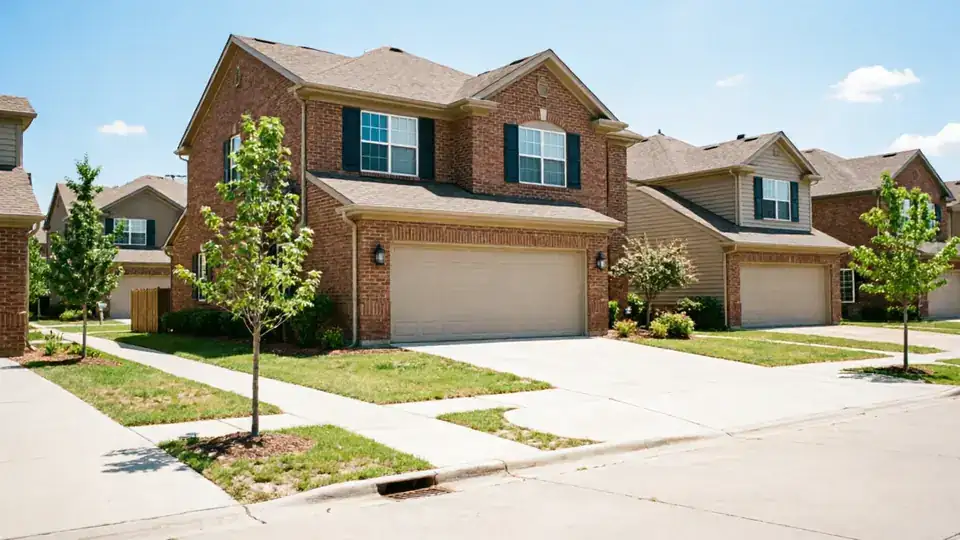
Trophy Club's housing stock centers on 2000, which puts a lot of garage doors and their openers right at the age where original parts start failing in clusters. A door installed when a house was built in 2000 is now in its mid-twenties, and that's past the service life of the torsion springs, the nylon rollers, and often the opener itself if it's never been swapped. Unlike the much wider 1973-2009 build range across the broader Addison service area, Trophy Club's homes cluster tightly around that one window, so the failures tend to show up on a lot of driveways at once rather than being spread thin. If you're hearing a grinding opener gear or watching a door sag on one side, you're not dealing with a fluke - you're dealing with the age of the neighborhood. These are usually steel sectional doors on standard torsion hardware, not the older one-piece or side-mounted setups you'd find in an area built decades earlier. That's good news on parts availability, since this hardware is still common, but the springs and cables are due regardless of how the door looks from the driveway.
This Area's Housing
With 4,784 households and a median income of $193,026, Trophy Club sits well above the income levels you'll see in a lot of the wider service area, and that shows up in what homeowners here are asking for - insulated steel doors with upgraded hardware rather than the cheapest replacement option. The housing itself, built around 2000, means most garage doors are steel sectional units on standard torsion springs rather than the lighter aluminum or older wood doors you'd find in an area with an earlier build date. Moderate heat is the main climate factor doors here deal with, which is easier on weatherstripping and seals than extreme heat bands but still wears down lubrication on rollers and hinges over two-plus decades. None of this is dramatic weather exposure - it's just steady age catching up with hardware that was never meant to last forever.
What We Do Most in This Area
In Trophy Club, the bulk of our work is opener replacement and torsion spring swaps, both driven by the same thing: doors and openers that were installed when these homes were new around 2000 and have simply reached the end of their rated cycles. We also handle cable replacement and roller service, usually alongside a spring job since a tech is already up on the ladder. What we try to talk people out of is patching an opener that's clearly failing gear by gear - once the motor is grinding or skipping, a repair is usually a short-term fix before a full replacement anyway, and we'll tell you that up front rather than billing you twice for the same problem.









