
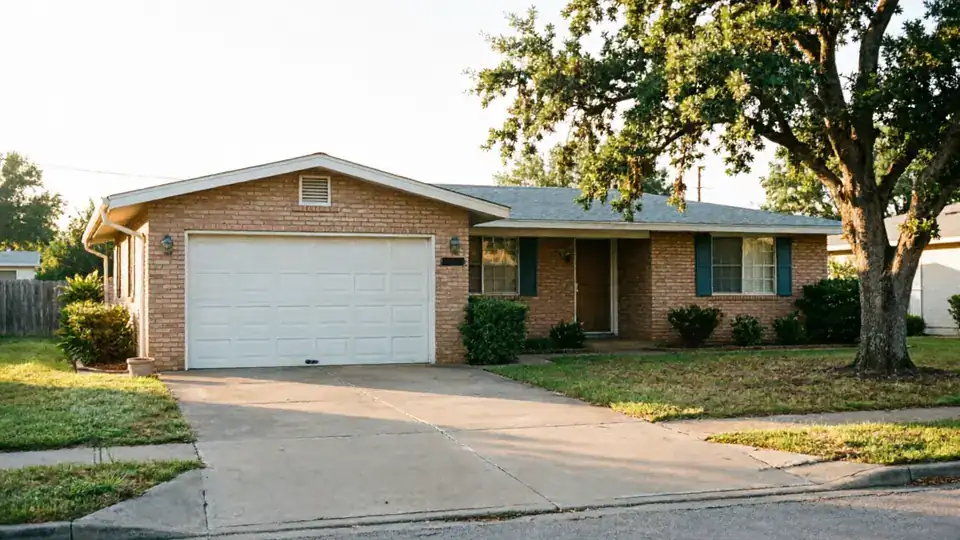








What the Housing Means for Your Door
Highland Park's housing stock centers on a median build year of 1973, which puts it well ahead of the 2002 median across the wider service area we cover out of Addison. That gap matters. A door installed when a house went up in the early 1970s is almost never the same animal as a 2000s-era door. You're more likely to find older extension-spring setups bolted to the side of the track rather than a torsion bar overhead, and the opener, if it's been swapped at all, may be mismatched to hardware that predates it by decades.
We see this pattern across the broader area too, where most of the stock dates from the 2000s, so a 1973-built neighborhood like this one stands out as older than its neighbors on our route. That means parts availability runs differently - some extension-spring brackets and older drum styles aren't something every supplier keeps on the shelf, and replacement sometimes makes more sense than chasing a part for a design that's 50 years old.
We're honest about that trade-off before we quote anything. If a repair means special-ordering a bracket for a spring system nobody makes anymore, we'll say so, and we'll tell you what a straight swap to current hardware would run instead.
The Calls We Get From Here
From Highland Park, the calls we get skew toward age-related failure rather than the opener-board glitches we see in newer construction closer to 2000s-era stock
Frayed or snapped extension springs, worn galvanized cable starting to kink at the drum, and tracks that have shifted slightly out of plumb after five decades of seasonal temperature swings - those are common on a door this age.
Our climate band here runs moderate on heat exposure
So we're not dealing with the kind of extreme summer cycling that cooks nylon rollers and opener gaskets in hotter regions. That's a small mercy for older hardware - it means the springs and cables on a 1973 door have usually failed from age and cycle count, not heat stress, which changes what we check first on a service call.
We also get calls about panel sections that don't match
A sign of a partial replacement done at some point in the house's life, often with a section that's close but not identical to the original. Matching an orphaned panel on an older door is sometimes possible and sometimes isn't; we'll tell you straight which one it is before we start.
This Area's Housing
Highland Park counts roughly 3,249 households, a modest number next to the 37,275 owner-occupied houses spread across our full service area, which tells you this is a tighter, more established pocket rather than a sprawling subdivision. Median household income here runs around $250,001, well above the broader area median of $158,333, and that income level tends to show up in the work - owners here are more willing to put money into a proper spring and track replacement rather than patch a door that's on its last cycle.
We travel here from our shop in Addison, about 9 miles out, so every job here is a drive, not a drop-in. That distance isn't a problem for scheduling, but it does mean we plan parts ahead of time rather than carrying every odd bracket in the truck on spec - especially for the older extension-spring hardware this area tends to need.
The house age here, older than most of the 17 named areas we track across the territory, means we come prepared to find a torsion conversion already done by a previous owner, or not done at all.
What We Do Most in This Area
Given the age of the stock, most of our work in Highland Park is spring and cable replacement, with a fair number of torsion conversions for owners who want to move off older extension-spring setups for good. We also do opener swaps where the original unit has outlived its gearing, and track realignment on doors that have settled slightly with the house.
We don't recommend replacing a whole door just because one section is damaged - if the panel can be matched or the section can be sourced, repair is usually the cheaper and faster path, and we'll say so even when a full replacement would be the bigger job for us. That's the honest call more often than not on a house this age, where the frame and hardware underneath are usually still sound even if one panel took a hit.
What we don't do is guess at parts before we're on site. An older torsion or extension setup can hide a lot behind the bracket, so we quote the job after a look, not before.









